



Between 2000 and 2025, India’s livestock industry—especially dairy and poultry—has grown rapidly, evolving into an intensive agri-industrial system that meets food demand but raises major ethical and welfare concerns. This report critically analyzes the systemic suffering within these sectors through legal, ethical, and welfare frameworks using secondary data from credible national and international sources.
India’s dairy industry, while the world’s largest, is dominated by close-tethering, inadequate housing, and harmful management practices such as oxytocin misuse and psychological manipulation (e.g., the use of “dummy calves”). Welfare assessments show that over 86% of dairy animals live under unacceptable conditions, with industrial-scale farms showing the worst welfare scores. Even cow shelters (gaushalas), often regarded as safe havens, are found to replicate commercial exploitation due to financial constraints.
In the poultry sector, both layer and broiler systems exhibit extreme confinement and overcrowding. India’s minimum space standard (550 cm² per hen) lags behind international norms by more than a decade, resulting in severe behavioral deprivation. The overuse of antibiotics and growth promoters to sustain high-density production contributes to antimicrobial resistance (AMR)—a public health and ethical crisis.

Legally, India’s Prevention of Cruelty to Animals (PCA) Act, 1960 is outdated and inconsistent with the constitutional recognition of animal dignity (Article 21). The Act permits painful procedures, imposes negligible fines, and lacks provisions for humane slaughter or enforcement. Institutional mechanisms such as the Animal Welfare Board of India (AWBI) face severe implementation gaps, forcing the judiciary and civil society to act as de facto regulators through advocacy and litigation.
The report documents the crucial role of NGOs and activists—such as FIAPO and PETA India—in exposing systemic cruelty and advocating reforms. Their efforts have sparked public discourse and judicial intervention, though legislative inertia persists.
Recommendations include:

- Strengthening the PCA Act and removing cruelty exemptions.
- Mandating pain relief for mutilations and pre-slaughter stunning.
- Banning battery cages and close-tethering.
- Regulating antimicrobial use and supporting cage-free, loose-housing systems.
- Introducing welfare-linked subsidies and consumer labeling for ethical producers.
Ultimately, the study concludes that India’s current model of livestock production is economically efficient but ethically unsustainable. True progress demands legislative reform, operational restructuring, and cultural transformation toward humane and sustainable farming aligned with constitutional and global ethical standards.
I. The Intensification of Indian Livestock and the Crisis of Welfare
A. Contextualizing India’s Dairy and Poultry Growth (2000–2025)
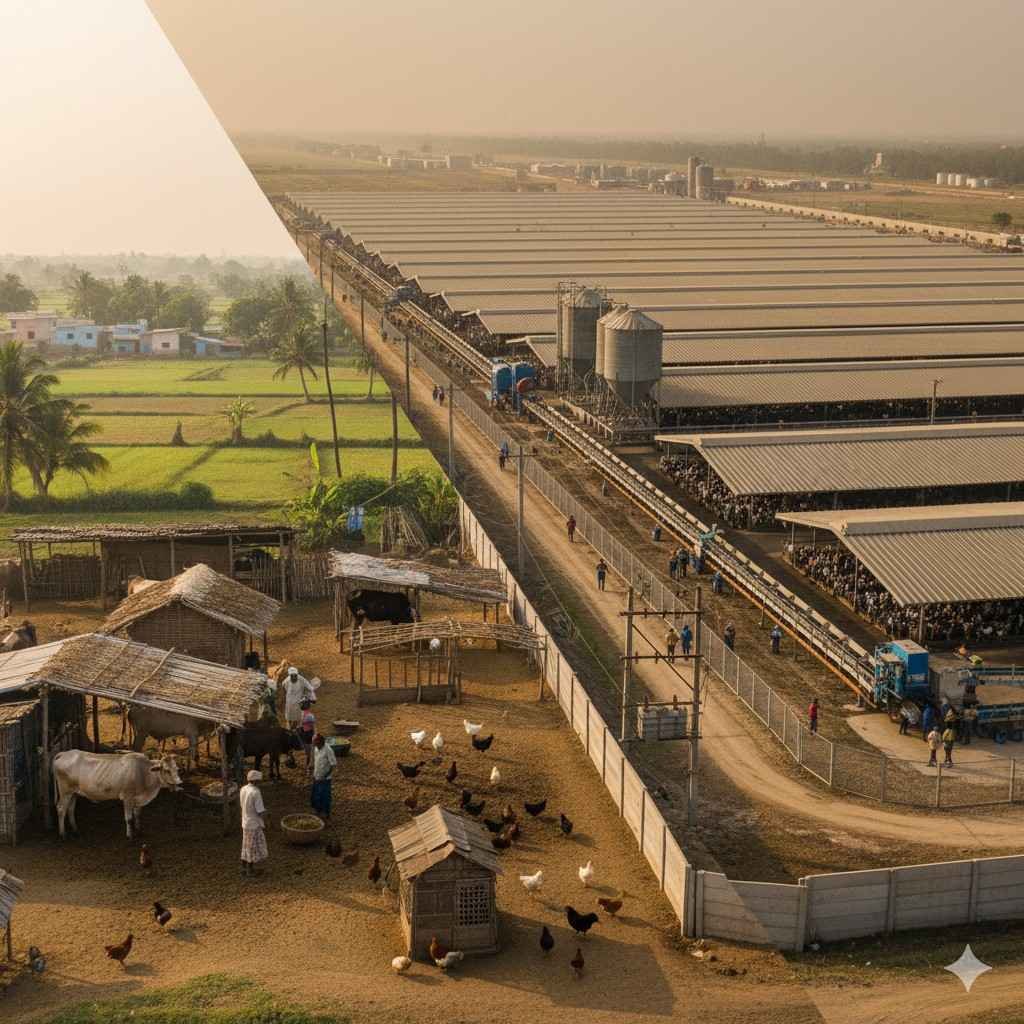
The period between 2000 and 2025 has witnessed a profound structural transformation within India’s livestock sector, shifting from traditional, fragmented operations toward a rapidly intensifying agri-industry. This evolution has been critical in addressing rising consumer demand, providing affordable protein, and serving as a vital contributor to rural employment and national economic resilience.1 The sector’s expansion, driven by urbanization and improved efficiencies in breeding and nutrition, has necessarily relied on methods that prioritize scale and output.2
This intensification has positioned India as a dominant global force, notably possessing the largest dairy cattle population in the world, estimated at over 48 million animals.3 However, this sheer scale exponentially magnifies the potential for welfare suffering inherent in industrial practices. While the industry promises continued growth and competitive global positioning, structural deficiencies such as unstable pricing, inadequate cold storage and logistics, and persistent infrastructure gaps continue to challenge its sustainability.1 Crucially, the pursuit of efficiency and scale must be critically examined against the ethical costs borne by the animals under production.

B. The Philosophical and Ethical Basis of Animal Welfare and Sentience in Indian Law
India’s legal and constitutional architecture sets a high standard for animal protection, though this ambition often conflicts with commercial reality. The Constitution mandates the State to organize agriculture and animal husbandry on modern and scientific lines (Article 48).5 More fundamentally, it imposes a Fundamental Duty on every citizen to protect the natural environment and, critically, “to have compassion for living creatures” (Article 51A(g)).5
A seminal judicial development occurred with the Supreme Court’s ruling in the Jallikattu Case, which extended the rights guaranteed under Article 21 (Right to Life and Personal Liberty) to all living beings.5 The Court emphasized that every animal has an intrinsic worth, honor, and dignity that cannot be arbitrarily deprived.5 This legal framework elevates animal protection to a constitutional right, theoretically demanding the highest standard of care and respect.
However, this constitutional recognition conflicts directly with the limitations of the primary legislative instrument, the Prevention of Cruelty to Animals (PCA) Act, 1960. While the PCA Act recognizes that animals can suffer physically and mentally and is intended to prevent unnecessary pain 6, its philosophical basis centers on animal welfare—allowing for humane usage, ownership, and consumption—rather than comprehensive animal rights that prohibit usage altogether.8 This regulatory incoherence is profound: a Supreme Court mandate recognizing dignity is undermined by a foundational law that simultaneously exempts common, painful agricultural procedures (such as nose roping and castration) from being classified as cruelty.7

This analysis highlights the critical economic-cultural paradox of bovine suffering. Although India maintains strong cultural and political rhetoric centered on cow protection and non-violence 9, ground realities show that the economic function of the animal (milk production) consistently overrides the cultural imperative for protection. This is particularly evident in the treatment of non-productive animals, such as male calves, and in the adoption of management practices dictated purely by maximizing output or convenience.10 This dissonance demonstrates that economic necessity often sets a de facto welfare standard far below the de jure standards articulated in the Constitution.
C. Overview of the Welfare Challenge: Intensification and the Five Freedoms Framework
The systemic problems identified in both the dairy and poultry sectors represent a failure to uphold the fundamental principles of animal welfare, often measured against frameworks such as the Five Freedoms. The focus of concern shifts from direct, intentional acts of cruelty to the systemic harms inflicted by normalized industrial practices, often assessed using a “harms” model of welfare evaluation.11 These harms are pervasive, ranging from severe physical discomfort and restricted movement to psychological stress and vulnerability to disease. The following analysis measures the condition of farmed animals against the baseline expectation of humane and ethical sustainability.
II. Critical Assessment of Animal Welfare in India’s Dairy Sector
A. Housing, Confinement, and the Denial of Natural Behavior
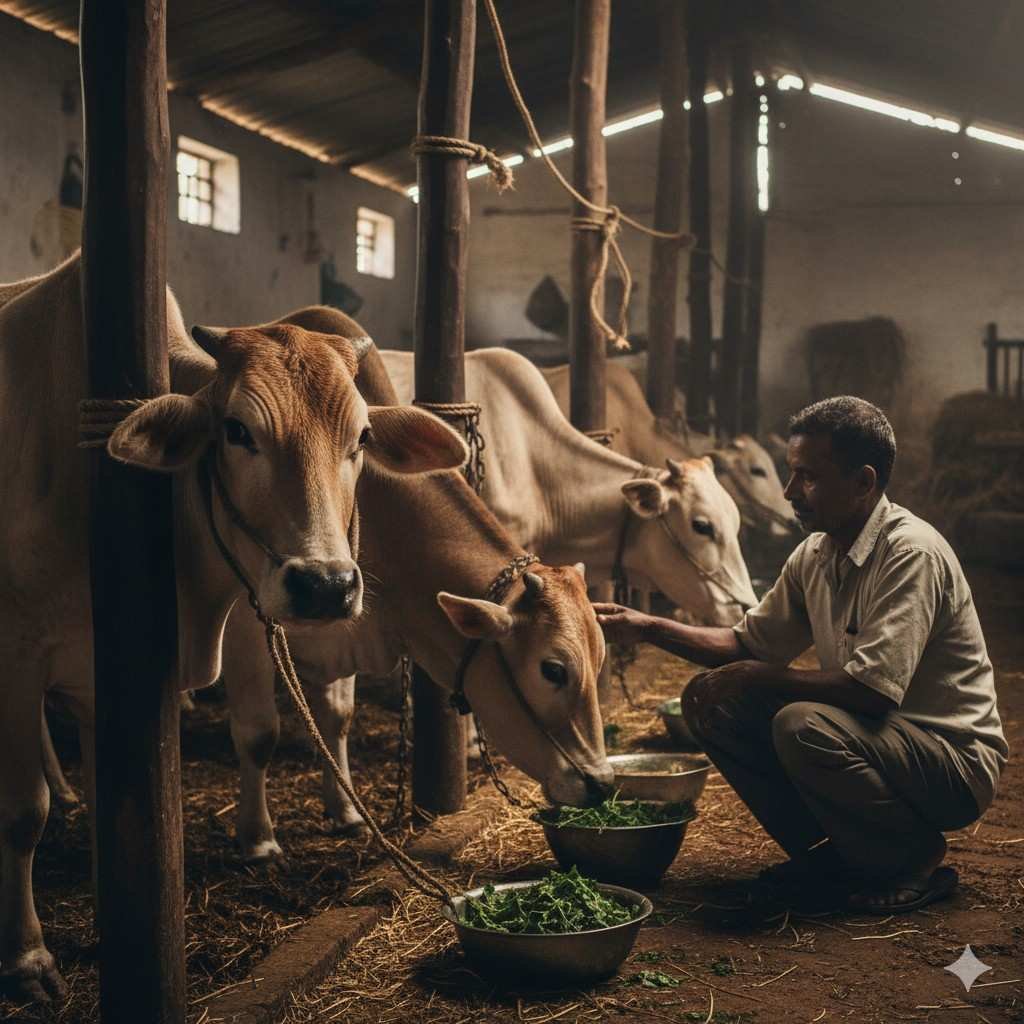
The most immediate and widespread welfare deficit in India’s dairy sector relates to confinement and tethering. Objective welfare assessments confirm that close-tethering is the majority practice across numerous dairy farms. Data shows that every single cow observed in one study was closely tied, typically by a rope less than 1 meter in length, often secured via a halter that pierces the nasal septum.3 For half of the farms studied, cattle were kept tied inside their housing for the entire day; even when outdoor access was provided, the animals were typically still restricted by close-tying or hobbling.3

The consequence of this close-tethering is the systematic denial of the Freedom from Discomfort and the Freedom to Express Normal Behavior. The practice inhibits major postural changes—preventing animals from lying down comfortably, turning around, engaging in social behavior, or obtaining necessary exercise.3 Tethering is also intrinsically linked to the denial of basic resources: unlimited access to drinking water was documented on only 22% of farms, and access to quality green forage was restricted.3 Furthermore, a lack of appropriate physical infrastructure—including clean housing, shelter, and comfortable resting areas—is endemic in small-scale dairy farms, further compromising their well-being.3
B. Welfare Costs of High Productivity and Unethical Management
The pursuit of high milk yields introduces profound ethical conflicts and illegal practices. A significant and documented source of animal suffering is the illegal use of oxytocin. Investigations by civil society organizations reveal that nearly half (47%) of dairies surveyed utilized this hormone to induce painful labor and stimulate milk let-down, illustrating a severe disregard for the maternal health and natural reproductive cycles of the bovines.10
Furthermore, the management of lactation often involves practices designed to exploit the psychological distress of the mother. The use of a “Khal Bacha,” a dummy calf often made of straw and the skin of a deceased calf, is documented as a mechanism to trick the mother into continued milk let-down following the unexpected death of her natural calf.4 This practice prolongs the mother’s psychological trauma for the sole purpose of economic yield.

Perhaps the starkest indicator of systemic welfare failure lies in the treatment of non-productive animals. Male calves, being redundant to the lactation cycle, are often sold within three months of birth or simply abandoned and left to die.10 This ruthless focus on female productivity and the disposal of byproducts underscore an industry model where the value of an animal is purely transactional and ephemeral.
C. The Gau Gaatha Paradox and Welfare Scoring
The systemic suffering is not limited to purely commercial settings; it extends into institutions ostensibly dedicated to protection. The Gau Gaatha investigation into gaushalas (cow shelters) revealed that many facilities, struggling for financial sustainability and relying heavily on donations, function as commercial dairies in disguise.13 The conditions documented contradicted the cultural and political rhetoric of cow protection.13 Key violations included the separation of cows and calves (66% of gaushalas), continued commercial breeding (86%), and painful practices such as tying the hind legs of cows during milking (26%).13 This demonstrates a widespread hypocrisy where economic pressure overrides ethical mandates, even within organizations founded on ethical principles.
Academic assessments underscore the unacceptable extent of suffering across the sector. Studies confirm that the majority of dairy animals (86.7%) were found to have unacceptable welfare scores (defined as less than 60%).15 Only 13.3% of animals achieved an acceptable status.

A comparative analysis across different farm sizes provides a compelling argument against unchecked industrial scaling.
Comparison of Dairy Welfare Scores Across Farm Types (Representative Case Study)
| Herd Size Category | Overall Mean Welfare Score (Percentage) | Welfare Status Category | Implication for Industrialization |
| Small Herds | 52.9% | Average | Better compliance, but still unacceptable by strict welfare standards. |
| Medium Herds | 53.5% | Average | Best mean score, suggesting optimal trade-off in efficiency/care. |
| Large Herds | 47.2% | Poor | Industrial scale leads to a significant drop in individual animal care.15 |
| Overall Acceptable (>60%) | N/A | 13.3% | Majority (86.7%) of dairy animals face unacceptable welfare conditions.15 |
The data confirms a critical inverse correlation: large herd farmers recorded significantly lower overall welfare scores (47.2%) compared to small and medium herds.15 This means that the push toward industrial efficiency and larger operational scales inherently leads to a statistically probable decline in individual animal welfare standards. This validates the activist critique that the current model of dairy industrialization is fundamentally incompatible with acceptable welfare standards.

III. Systemic Cruelty in the Indian Poultry Industry
A. Confinement Standards and Legislative Lag (Layers)
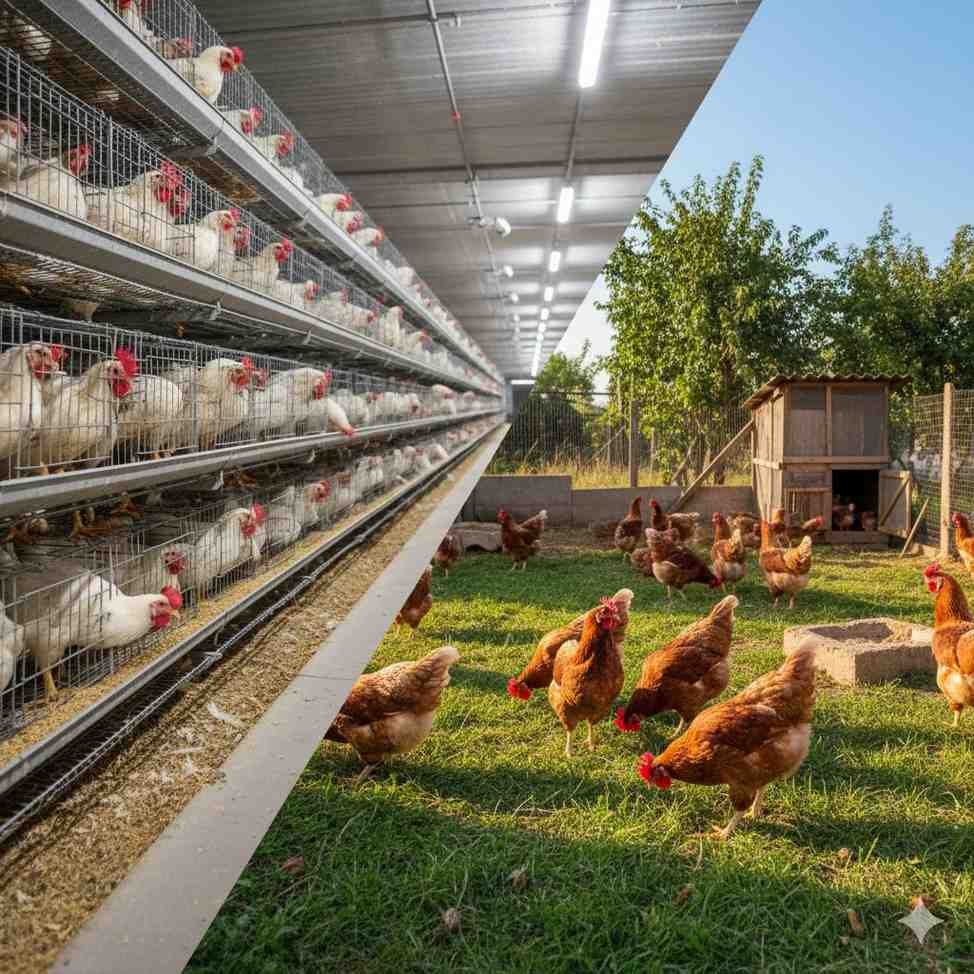
The layer hen industry relies heavily on extreme confinement, a practice that constitutes a fundamental denial of the Freedom to Express Normal Behavior. The overwhelming majority of laying hens worldwide, including those in India, live in cages that restrict movement to an area smaller than an A4 sheet of paper, preventing essential behaviors such as foraging, nesting, and wing-flapping.16
India’s accepted minimum standard for floor space per layer bird is set at 550 cm².17 When compared to international benchmarks, the severity of this welfare deficit becomes clear. This 550 cm² standard corresponds precisely to the space allowance mandated in the European Union (EU) for unenriched cages—a system that has since been banned or phased out across the EU.18 Since 2012, the minimum space required for hens in enriched cages in the EU has been 750 cm² per bird.19 Consequently, India’s current standard operates at least a decade behind progressive global welfare standards.
Comparative Standards for Layer Hen Confinement: India vs. EU (Post-2012)

| Metric | Indian Minimum Standard (Existing) | EU Minimum Standard (Enriched Cages, Post-2012) | Welfare Implication |
| Space Allowance per Hen | 550 cm² 17 | 750 cm² 19 | India’s standard offers 27% less space than the modernized European minimum. |
| Cage System Type | Unenriched/Conventional (Typical) | Enriched (Mandatory) | Hens lack essential facilities like nests, perches, and litter for natural behavior.19 |
| Legal Status of System | Permitted and widely used | Banned for new operations (post-2012, replacement of conventional) 18 | India’s minimum standard lags significantly behind the EU timeline for animal protection. |
The stress and psychological trauma induced by this extreme confinement necessitate further cruelty: painful interventions such as de-beaking (where part of the beak is removed) are performed to prevent injuries caused by pecking and feather pulling among stressed, crowded birds.7 This required mutilation is a direct, operational consequence of inadequate housing standards. This significant disparity in welfare standards suggests that lower welfare costs may provide Indian producers with a competitive economic advantage, potentially resulting in trade friction if the EU utilizes labeling or tariffs to prevent imports from countries with lower standards.20 This links welfare reform directly to global economic viability.
B. Broiler Production, High Density, and Physical Trauma
Broiler chicken production, reared for meat, often involves Concentrated Animal Feeding Operations (CAFOs) characterized by raising animals in confinement at extremely high densities.21 While broilers are typically housed on litter, the rapid genetic selection for growth combined with overcrowding leads to high levels of physical trauma, including severe lameness and restricted movement. High stocking density creates physiological stress, which contributes to elevated mortality rates and disease risks.7 Expert organizations recommend reducing broiler stocking density to a maximum of or lower to alleviate this inherent suffering.7
C. The Disease-Antibiotic Nexus and Public Health Ethics
A critical ethical crisis resulting from intensive poultry farming is the massive and often uncontrolled use of antimicrobials (AMs). As the poultry sector has grown, so has the use of AMs, which are applied prophylactically, sub-therapeutically (in drinking water), and, most concerningly, as growth promoters in feed.22

This practice constitutes an ethical failure because pharmaceuticals are used to mask or compensate for poor animal health and inadequate biosecurity inherent in high-density systems, prioritizing production efficiency over animal health and well-being.23 The over-application of AMs is the primary driver of Anti-Microbial Resistance (AMR), which creates serious health hazards for both animals and humans, rendering antimicrobials ineffective against diseases.22 For instance, a 2018 study exposed the intensive use of Colistin, a last-resort antimicrobial for human healthcare, by private sector suppliers, prompting a government ban on its use.22
Intensive livestock farming creates an environment conducive to disease transmission due to high population density and concentration, making it an excellent breeding ground for zoonotic pathogens.21 This health crisis is compounded by regulatory lacunae: there is a lack of strict implementation and enforcement of rules, inadequate disease surveillance, and unregulated imports of antimicrobials.22 This reliance on drugs to mitigate the biological instability of high-density systems proves that the efficiency gains are partially offset by high mortality rates, public health externalities, and systemic biological unsustainability.
IV. Regulatory Failure: The Inadequacies of Indian Animal Law

A. The Prevention of Cruelty to Animals (PCA) Act, 1960: Foundation and Flaws
The PCA Act of 1960, intended to prevent the infliction of unnecessary pain 6, is structurally flawed in its application to industrial animal husbandry.

Legal Exemptions for Cruelty
The most significant legislative failure is enshrined in Section 11(3)(a), which explicitly exempts painful, routine agricultural practices (mutilations) from being considered cruel. These exempted procedures include dehorning, castration, and nose roping.7 By legally normalizing procedures that cause acute pain without mandating the use of anaesthesia or analgesics, the Act sanctions systemic suffering and sets the standard of humane necessity far below basic veterinary ethical expectations. Expert organizations advocate for immediate amendment of Section 11(3)(a) to remove these exemptions and mandate pain relief.7
Ineffective Penalties and Slaughter Gaps
The penalty structure of the PCA Act is non-deterrent. Historical penalties (such as a maximum fine of 50 rupees for a first offense) are negligible operational costs for large industrial facilities.7 This low cost of cruelty fundamentally incentivizes non-compliance, as the economic benefit of low-welfare practices far outweighs the risk of regulatory penalty.7
Furthermore, while the Prevention of Cruelty to Animals (Slaughter House) Rules, 2001, mandate veterinary inspection and prohibit slaughter in sight of other animals 26, Section 28 of the PCA Act allows non-stunned slaughter.7 This allowance conflicts with the ethical goal of rendering animals instantaneously unconscious and insensible to pain prior to bleeding, a fundamental requirement under international humane slaughter standards.7

Key Legislative Deficiencies in the Prevention of Cruelty to Animals Act (PCA, 1960)
| PCA Act Section / Area | Current Provision/Status | Critical Ethical/Welfare Gap | Advocated Reform |
| Section 11 (3)(a) | Exempts mutilations (e.g., nose roping, dehorning, castration) from cruelty 7 | Normalizes procedures that cause acute pain without required pain relief (anaesthesia/analgesia). | Mandate anaesthesia for all surgical mutilations. |
| Penalty Structure | Insignificant fines (e.g., up to ₹50) 7 | Fails to serve as a financial deterrent against industrial-scale suffering. | Substantially increase financial penalties for cruelty offences. |
| Section 28 / Slaughter | Allows slaughter without stunning (implicitly) 7 | Permits animals to remain conscious and insensible to pain during the slaughter process. | Repeal Section 28 and mandate instantaneous stunning prior to bleeding.7 |
B. Implementation Gaps and Institutional Ineffectiveness
The Animal Welfare Board of India (AWBI), established as an advisory body under the PCA Act 8, faces serious limitations in effective implementation. Audit reports have highlighted institutional issues, including low scheme implementation coverage and ineffective complaint mechanisms.27 Critics suggest that the AWBI’s focus on broad animal rights issues, often under the influence of advocacy groups, has led to policy conflict and subverted the original intent of the PCA Act regarding humane usage.8 This institutional paralysis means that while the AWBI may issue guidelines designed to improve welfare 28, the lack of effective legislative authority prevents the mandatory enforcement of these standards, creating a system heavy on rhetoric but light on compliance.
Regulatory scrutiny has been belatedly applied to the environmental impacts of industrial farming. The National Green Tribunal (NGT) intervened in 2020, directing the Central Pollution Control Board (CPCB) to revisit guidelines for poultry farms. The NGT order mandated that all poultry farms above 5,000 birds must comply with stringent environmental consent mechanisms under Air, Water, and Environment Protection Acts, effective from 2021.29 This judicial intervention confirms that industrial animal husbandry constitutes a significant environmental and public health hazard that previous regulatory frameworks failed to address, requiring the judiciary to step in where executive oversight had lagged.
V. Civil Society Action, Advocacy, and Reform Case Studies
A. NGO-Led Investigations and Litigation
Civil society organizations have been the principal drivers of welfare reform, utilizing rigorous investigation and litigation to challenge the status quo. Organizations like the Federation of Indian Animal Protection Organisations (FIAPO) and PETA India conduct undercover investigations to expose the daily realities of industrial farming, moving the debate beyond abstract ethics to concrete suffering.30
FIAPO’s A Dairy Snapshot: Gujarat and Gau Gaatha successfully revealed endemic, illegal issues such as widespread oxytocin usage and the exploitation of animals in shelter systems.10 This detailed documentation provides the necessary empirical basis for legal challenge and public awareness.
Given the documented failure of executive bodies like the AWBI and various state pollution boards to enforce existing laws, civil society has increasingly relied on judicial intervention through Public Interest Litigations (PILs). For instance, FIAPO approached the Allahabad High Court in 2020 demanding the efficacious implementation and enforcement of laws pertaining to dairy animals in Uttar Pradesh.32 This heavy reliance on the judicial system means that the judiciary has become the de facto regulator of animal welfare, compensating for the failure of the legislative and executive branches to manage the ethical crisis proactively.
B. The Welfare Lobby and Public Discourse
Animal advocacy groups play a vital role in shifting public and policy discourse. PETA India campaigns extensively on the basis that animals are sentient individuals “not ours to eat,” promoting vegan alternatives and challenging the very legitimacy of animal agriculture.30
Simultaneously, the welfare lobby engages in direct policy lobbying, calling for greater governmental support and resources for organizations focused on animal care.34 Critically, this activism has broadened the public discourse beyond the narrow, single-optic cultural debates—such as religious restrictions on cow consumption—to include the multiple, intersecting impacts of commercial livestock farming on overall animal wellbeing, ecological integrity, and social justice.9 Civil society groups thus force public recognition of the ethical dissonance that allows cruel practices to flourish even in the presence of strong cultural protectionist sentiments.
VI. Recommendations for Humane and Sustainable Livestock Systems
A systemic transition toward ethical and sustainable livestock production in India requires immediate and mandatory legislative reform, radical operational changes, and economic support mechanisms to incentivize the adoption of higher welfare standards.
A. Legislative and Regulatory Amendments
- Strengthening the PCA Act: The law must be imbued with financial teeth. The government must substantially increase financial penalties for cruelty, with fines linked directly to the scale and turnover of the operation to act as a significant deterrent.7 Furthermore, Section 11(3)(a) must be amended to mandate veterinary supervision and the use of appropriate anaesthetics and analgesics for all painful agricultural procedures, including castration, dehorning, and nose roping.7
- Mandatory Stunning and Slaughter Reform: To adhere to global standards of humane slaughter and honor the constitutional right to dignity, Section 28 of the PCA Act must be repealed, and legislation introduced mandating pre-slaughter stunning to ensure instantaneous unconsciousness before bleeding.7
- Sentience and Registration: The government should formally and publicly enshrine animal sentience in national law.7 Additionally, mandatory registration for all medium and large poultry and dairy farms must be implemented to facilitate effective welfare auditing, disease surveillance, and antimicrobial control.22
B. Operational Reform: Banning the Worst Forms of Confinement
- Poultry Cage Phase-Out: Given the severe welfare deficits demonstrated by comparative standards, the government must implement a mandatory, phased ban on the worst forms of confinement, specifically battery cages for layer hens, initiating a transition to cage-free systems.7
- Density Restrictions: The high stocking density in broiler production must be curtailed immediately. New regulations must mandate a maximum density of or lower to mitigate suffering related to overcrowding, lameness, and disease risk.7
- Dairy Loose Housing: The practice of close-tethering must cease. Regulations must enforce the provision of loose housing systems, ensuring unrestricted access to clean water, sufficient quality forage, and adequate space for movement and natural behavior.3
C. Public Health and Biosecurity Reform
- Ending Non-Therapeutic Antibiotic Use: Strict governmental controls must be imposed to eliminate the use of antimicrobials as growth promoters and for non-therapeutic, prophylactic purposes across the livestock sector.22
- Investment in Health: The government and industry must invest heavily in robust biosecurity protocols, effective disease surveillance, and comprehensive staff training. Improving animal health practices reduces mortality rates and dependence on pharmaceuticals, addressing the root causes of the AMR crisis.22
D. Promoting Sustainable and Ethical Livestock Systems
- Sustainability and Welfare: The transition to humane livestock systems must be recognized as a prerequisite for ecological sustainability. High-welfare practices facilitate climate-smart production, enhancing environmental mitigation and resilience.35
- Incentivizing Transition: Financial mechanisms, including subsidies, low-interest loans, and tax benefits, must be implemented to support farmers transitioning from intensive operations to higher welfare and climate-resilient systems.23 Furthermore, consumer information (labelling schemes) should be used to reward producers operating above minimum welfare standards.20
- Integrated Farming and Research: Policymakers should promote Integrated Farming Systems (IFS), which blend livestock with horticulture and cropping systems to enhance productivity, minimize climate risk, and better manage environmental outputs like manure.35 Finally, research funding should be allocated to alternative bovine products that are not milk-based, alongside investments in nutritious fodder crops on dedicated gochar lands, ensuring the long-term ethical viability of the livestock sector.14
VII. Conclusion
This critical analysis of India’s dairy and poultry industries from 2000 to 2025 reveals a systematic and pervasive failure to uphold acceptable standards of animal welfare, driven primarily by the economic pressures of industrial intensification. The majority of animals in these sectors endure unacceptable conditions, characterized by severe confinement (layer cages, close-tethering), chronic denial of basic natural behaviors, and reliance on painful practices (mutilations, oxytocin use) and pharmaceutical inputs (antibiotic growth promoters).
The regulatory environment is defined by a fundamental contradiction: high constitutional recognition of animal dignity (Article 21) is undermined by a weak foundational statute (PCA 1960) that exempts painful procedures and imposes negligible penalties. This policy paralysis, combined with institutional implementation gaps, has forced civil society and the judiciary to become the primary drivers of reform.
Moving forward, the nation must confront the reality that balancing productivity, ethics, and sustainability requires abandoning the current intensive model. The path toward sustainable livestock production is contingent upon legislative action—banning the worst forms of confinement, mandating pain relief for mutilations, and enforcing stringent anti-cruelty penalties. By formalizing sentience, incentivizing loose housing and cage-free systems, and prioritizing animal health over pharmaceutical compensation, India can align its massive livestock industry with its own constitutional values and progressive global ethical benchmarks. The challenge for the next decade is not merely to increase production, but to ensure that productivity is achieved without compromising the fundamental right to life, honor, and dignity of the tens of millions of animals within its borders.

🐮 Top 10 FAQs on India’s Dairy and Poultry Industries (2000–2025)
1. What is the main focus of this research on India’s dairy and poultry industries?
The study critically examines the ethical and welfare challenges in India’s dairy and poultry sectors from 2000–2025, analyzing how industrialization, economic pressures, and weak laws affect animal wellbeing and sustainability.
2. How has India’s livestock sector changed over the past two decades?
Between 2000 and 2025, India’s livestock sector has shifted from small, traditional farms to industrial-scale operations. While this transformation improved productivity, it also led to overcrowding, stress, and declining welfare standards.
3. What are the major welfare issues in India’s dairy sector?
Close-tethering of cows, poor housing, oxytocin misuse, psychological distress from “dummy calves,” and neglect of male calves are widespread. Over 86% of dairy animals live under unacceptable welfare conditions.
4. Why are poultry welfare conditions in India considered poor?
Most layer hens live in cramped cages smaller than an A4 sheet of paper. Broilers are overcrowded, causing pain, lameness, and disease. India’s cage space standard (550 cm²) lags far behind global norms.
5. How do these industrial practices affect public health?
Overuse of antibiotics in poultry and dairy farms has fueled antimicrobial resistance (AMR), threatening both animal and human health. Drugs like Colistin were banned after being used as growth promoters.
6. What are the main legal shortcomings in India’s animal welfare framework?
The Prevention of Cruelty to Animals Act, 1960, exempts painful farming practices, allows non-stunned slaughter, and imposes trivial fines. These loopholes weaken enforcement and contradict constitutional animal-dignity principles.
7. What role do NGOs and activists play in addressing these issues?
Groups such as FIAPO and PETA India conduct investigations, campaigns, and court petitions to expose cruelty and push for reforms, often stepping in where government enforcement fails.
8. How do India’s animal welfare standards compare internationally?
India trails behind the EU and other countries. For example, unenriched cages were banned in the EU in 2012, but remain common in India. Similar gaps persist in slaughter and confinement regulations.
9. What reforms does the study recommend for improving animal welfare?
Key reforms include amending the PCA Act, banning battery cages and tethering, mandating pre-slaughter stunning, regulating antibiotic use, and offering incentives for cage-free and humane systems.
10. What is the overall conclusion of the report?
India’s dairy and poultry industries are economically strong but ethically unsustainable. Sustainable progress requires balancing productivity with compassion, reforming laws, and embracing humane farming practices.
Works cited
- Poultry Industry in India: Trends, Challenges, and Opportunities in 2025 – Indian Herbs, accessed October 9, 2025, https://indianherbs.org/
- review of recent advances in livestock management in india – ResearchGate, accessed October 9, 2025, https://www.researchgate.net/
- Welfare Challenges of Dairy Cows in India Identified Through On …, accessed October 9, 2025, https://pmc.ncbi.nlm.nih.gov/
- Documenting Dairy Farming in India – We Animals, accessed October 9, 2025, https://weanimals.org/
- Transportation and House-keeping of Egg-laying hens (layers) and Broiler Chickens. – S3waas, accessed October 9, 2025, https://cdnbbsr.s3waas.gov.in/
- Overview of Animal Laws in India – Animal Legal & Historical Center, accessed October 9, 2025, https://www.animallaw.info/
- India | World Animal Protection – Animal Protection Index, accessed October 9, 2025, https://api.worldanimalprotection.org/
- Animal Welfare Board out of control? – Civil Society Magazine, accessed October 9, 2025, https://www.civilsocietyonline.com/
- Debating animal agriculture in contemporary India: Ethics, politics, ecologies – Edinburgh Research Explorer, accessed October 9, 2025, https://www.research.ed.ac.uk/
- Welfare | Advance Animal Welfare Today – FIAPO, accessed October 9, 2025, https://www.fiapo.org/
- Animal Harms and Food Production: Informing Ethical Choices – PMC – PubMed Central, accessed October 9, 2025, https://pmc.ncbi.nlm.nih.gov/
- The Cow Paradox—A Scoping Review of Dairy Bovine Welfare in India Using the Five Freedoms – PMC, accessed October 9, 2025, https://pmc.ncbi.nlm.nih.gov/
- Probe reveals dirty, cruel secrets of India’s gaushalas – The Hindu, accessed October 9, 2025, https://www.thehindu.com/
- Many gaushalas are dairies in disguise, FIAPO probe reveals – Times of India, accessed October 9, 2025, https://timesofindia.indiatimes.com/india/many-gaushalas-are-dairies-in-disguise-fiapo-probe-reveals/articleshow/65754844.cms
- Full article: Welfare Issues on Dairy Farms in Tripura, India, as Identified Through On-Farm Inspection – Taylor & Francis Online, accessed October 9, 2025, https://www.tandfonline.com/
- Do better cages or cage-free environments really improve the lives of hens?, accessed October 9, 2025, https://ourworldindata.org/
- UNIT 9 MINIMUM WELFARE STANDARDS FOR COMMERCIAL LAYERS – eGyanKosh, accessed October 9, 2025, https://egyankosh.ac.in/
- Protection of laying hens | EUR-Lex – European Union, accessed October 9, 2025, https://eur-lex.europa.eu/
- TRANSITIONING TOWARDS CAGE-FREE FARMING IN THE EU | Institute for European Environmental Policy, accessed October 9, 2025, https://ieep.eu/
- Animal welfare in poultry production systems: Impact of EU standards on world trade, accessed October 9, 2025, https://www.researchgate.net/
- Industrial Animal Farming and Zoonotic Risk: COVID-19 as a Gateway to Sustainable Change? A Scoping Study – MDPI, accessed October 9, 2025, https://www.mdpi.com/
- Study on Animal Health Improvement & AMR Reduction in the …, accessed October 9, 2025, https://english.rvo.nl/
- Sustainable Livestock – International Finance Corporation, accessed October 9, 2025, https://www.ifc.org/
- Zoonosis emergence linked to agricultural intensification and environmental change – PMC, accessed October 9, 2025, https://pmc.ncbi.nlm.nih.gov/
- Handbook For Veterinary Officers on Animal Welfare Laws, accessed October 9, 2025, https://awbi.gov.in/
- Animal Markets and Zoonotic Disease in India, accessed October 9, 2025, https://animal.law.harvard.edu/
- Annual Report 2024 – 2025 of Animal Welfare Board of India: Audit Para’s – Scribd, accessed October 9, 2025, https://www.scribd.com/
- Guidelines – Animal Welfare Board of India, accessed October 9, 2025, https://awbi.gov.in/
- Environmental Guidelines for Poultry Farms – Central Pollution Control Board, accessed October 9, 2025, https://cpcb.nic.in/
- Cows, Chickens, Fish, and Other Animals Used for Food | PETA, accessed October 9, 2025, https://www.peta.org/
- Resources | Explore & Support Animal Rights – FIAPO, accessed October 9, 2025, https://www.fiapo.org/
- Rights | Advocate for Animal Rights Today – FIAPO, accessed October 9, 2025, https://www.fiapo.org/
- PETA India: India’s Animal Rights Organisation | PETA India, accessed October 9, 2025, https://www.petaindia.com/
- Civil society and animal welfare lobbying in India – WISERD, accessed October 9, 2025, https://wiserd.ac.uk/
- Sustainable Livestock Solutions: Addressing Carbon Footprint Challenges from Indian and Global Perspectives – MDPI, accessed October 9, 2025, https://www.mdpi.com/
- Why livestock and humane, sustainable agriculture matter at Rio+20 – WUR eDepot, accessed October 9, 2025, https://edepot.wur.nl/
- India: Agricultural Policy Monitoring and Evaluation 2023 | OECD, accessed October 9, 2025, https://www.oecd.org/



Get Involved!
Leave a Comment