


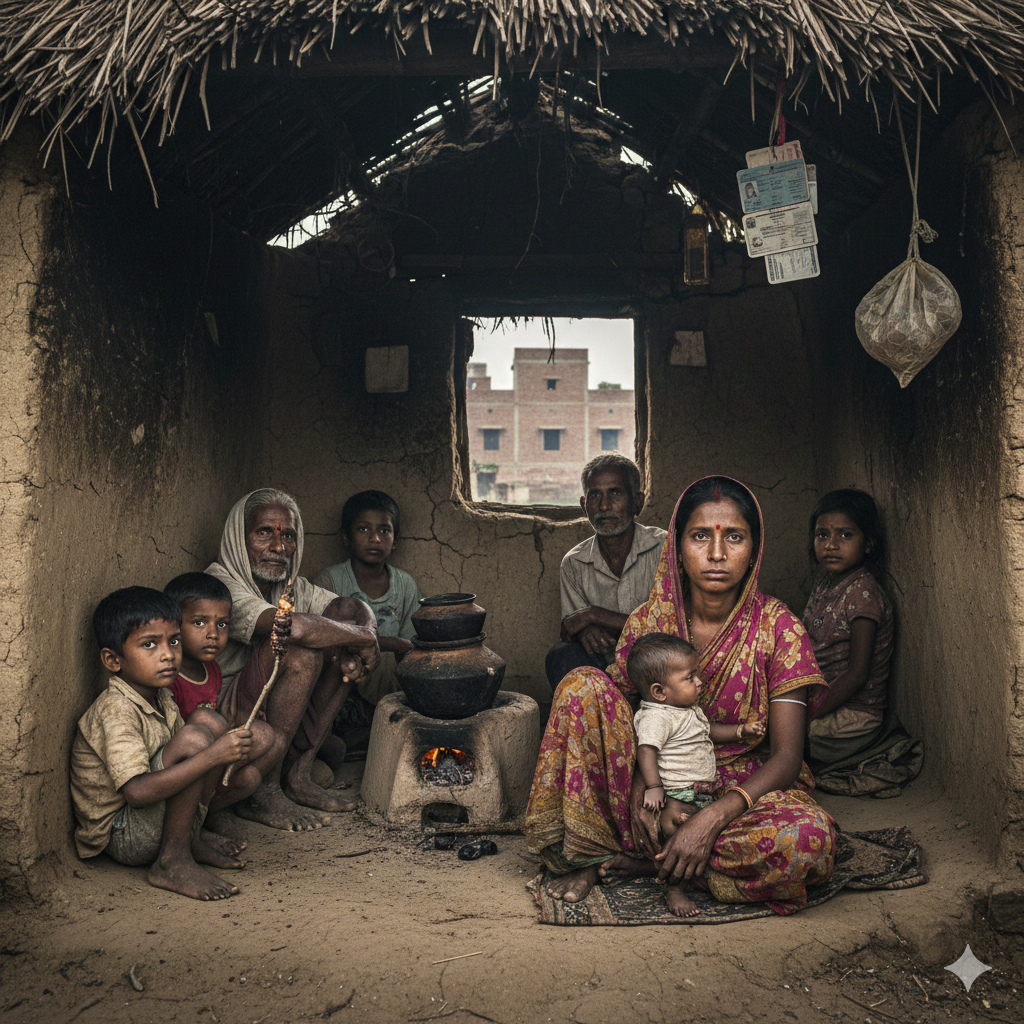

The Musahar are a severely marginalized Maha-Dalit community in Bihar, often tragically called “Dalits among Dalits.” They are historically landless, working primarily as agricultural and day laborers, facing extreme poverty and systemic inequality.
The Musahar’s life is defined by a desperate struggle for survival and crushing social exclusion.
The Name That Sobs: The name “Musahar” translates to “rat-eater.” This is not a culture, but a desperate act fueled by zero income and chronic starvation. Consuming rats from paddy fields symbolizes their collapse below the poverty line.

Social Apartheid (Chhuachhoot): They face deep-seated untouchability, isolated in segregated settlements called toiles.
Appalling Hypocrisy: Those in the surrounding society who refuse to drink their water readily visit their homes to consume the illegally brewed alcohol the women are forced to sell.
2. A Life Confined: Destitution and Landlessness

Their living conditions reinforce the relentless cycle of poverty, trapping generations.
Cramped Living: Entire families live, cook, and sleep in single, decaying mud-and-thatch rooms, often no larger than an 8×8 foot cage.
Trapped in Labor: The community is overwhelmingly landless. Three generations—father, son, and grandson—are trapped in the same grueling, ruthless cycle of seasonal labor with virtually no hope of upward mobility.

3. The Human Tragedy: Broken Futures and Exploitation
The systematic deprivation leads directly to devastating social issues, robbing the community’s most vulnerable of their futures.
Stolen Futures (Education): The literacy rate is shockingly below 10%. Children are forced to drop out because, as they state, “School costs money.”
The Widow Epidemic (Health and Marriage): Child marriage is rampant (girls as young as 12-15). Rampant alcoholism and diseases like TB cause men to die young, resulting in an alarming rate of young women widowed in their 20s and 30s.
Vulnerability and Abuse: Desperate women forced to brew and sell liquor become vulnerable targets for sexual exploitation and abuse by moneylenders and buyers.
4. Systemic Failure: The Aid That Never Arrives

The final tragedy is the failure of the state to reach the neediest, demonstrating how their plight is exacerbated by systemic neglect.
Documentation Barrier: Government welfare schemes, even those targeted at Mahadalits, fail because the Musahar community lacks basic documentation. This includes no bank accounts, no money to maintain benefits, and crucially, no official death certificates to claim widow pensions.
Crushing Exclusion: As the commentator noted, their situation proves that poverty is not just a lack of money; it is a social exclusion that crushes human potential.




Get Involved!
Leave a Comment